Skip to Content

Resignation Rhetoric: The Tinubu Conundrum and Nigeria's Governance Quagmire

Samuel Chimezie Okechukwu (Great Nigeria - Story Teller)
06/22/2026
DEEP DIVE

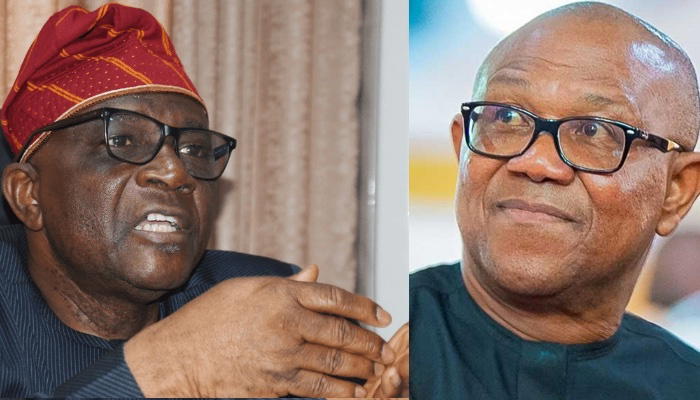
The political landscape in Nigeria is once again abuzz with controversy as Peter Obi, the presidential candidate of the Nigeria Democratic Congress (NDC), has called for the resignation of President Bola Tinubu, citing governance failures and drawing parallels with the exit of British Prime Minister Keir Starmer. This development has sparked a heated debate, with the Presidency swiftly responding to Obi's demands, labeling them as childish and hollow. As reported by Vanguard News, the Presidency's reaction was not taken lightly, with Bayo Onanuga, the President's Special Adviser on Information and Strategy, issuing a strongly worded statement dismissing Obi's call as an unwarranted distraction from the administration's achievements. According to Channels TV, the Presidency views Obi's actions as an attempt to undermine the government's efforts to address the country's economic and security concerns. The back-and-forth between Obi and the Presidency has brought to the fore the deep-seated issues plaguing Nigeria's governance structure, echoing sentiments expressed by various analysts who point to the need for a more robust and accountable leadership.

The recent electoral victories recorded by the ruling All Progressives Congress (APC) in Ekiti State and senatorial elections in Nasarawa, Enugu, Ondo, and Rivers States have been touted by the Presidency as a testament to the government's mandate and popularity. However, Obi's call for Tinubu's resignation underscores the persistent discontent among certain segments of the population regarding the government's handling of critical issues. As noted by Punch Nigeria, the Presidency has rejected Obi's comparisons to the United Kingdom system, emphasizing that Nigeria operates under a presidential system of government, unlike the United Kingdom's parliamentary system. This distinction is crucial, as it highlights the differences in governance structures and the implications for leadership accountability. The debate surrounding Tinubu's leadership is not merely about the merits of his presidency but also about the broader context of Nigeria's political and economic challenges. With Nigeria facing significant hurdles, including economic instability and security concerns, the question of whether Tinubu should remain in office has become a focal point for those seeking change.

The Governance Gauntlet: Economic Woes and Security Concerns

Nigeria's economic landscape is characterized by stagnant growth, high inflation, and a depreciating currency, factors that have contributed to widespread hardship among the populace. According to Leadership Newspaper, the Presidency has been at pains to point out that Obi's call for Tinubu's resignation is not only anti-democratic but also a distraction from the government's efforts to address these economic challenges. The government's response to the economic woes has been multifaceted, involving policies aimed at stimulating growth and stabilizing the currency. However, critics argue that these measures have been insufficient or misguided, leading to continued economic hardship for many Nigerians. As reported by Sun News Online, the Presidency has emphasized the progress made since 2023, despite acknowledging the difficulties faced by the nation. The debate over Tinubu's leadership is, therefore, also a debate over the efficacy of his economic policies and the future direction of the country.

The security situation in Nigeria remains a pressing concern, with various regions experiencing different forms of insecurity, from banditry to insurgency. Obi's call for Tinubu's resignation is partly predicated on the perceived failure to adequately address these security challenges. According to Peoples Gazette, Obi cited the example of Keir Starmer, suggesting that Tinubu should follow suit by stepping down if he is unable to effectively govern. This comparison, however, has been met with skepticism by the Presidency, which argues that the United Kingdom's parliamentary system allows for greater flexibility in terms of leadership change, unlike Nigeria's fixed presidential term. The security concerns are not merely a matter of political rhetoric but have real-world implications for the safety and well-being of Nigerians. Experts have pointed out that a more effective security strategy is needed, one that addresses the root causes of insecurity and provides a comprehensive approach to tackling the various threats facing the nation.

The Political and Cultural Undercurrents: Identity, Loyalty, and the Grassroots

The exchange between Obi and the Presidency is not occurring in a vacuum; it is influenced by the complex interplay of political loyalties, cultural identities, and grassroots sentiments. As Politics Nigeria reports, Obi's call has been framed by some as a reflection of the deep-seated frustrations among certain segments of the population with the Tinubu administration. The political landscape in Nigeria is characterized by a diverse array of ethnic and regional identities, each with its own set of grievances and expectations from the government. The response to Obi's call has, therefore, been varied, with some viewing it as a legitimate critique of the government's performance, while others see it as a politically motivated maneuver. The cultural and social dimensions of this debate are critical, as they underscore the need for a leadership that is not only effective but also responsive to the diverse needs and aspirations of the Nigerian people.

The role of political identity and loyalty in shaping public discourse cannot be overstated. In Nigeria, political allegiance is often tied to ethnic, regional, and religious affiliations, which can significantly influence how political messages are received and interpreted. Obi's call for Tinubu's resignation has, therefore, been viewed through the lens of these identities, with reactions varying accordingly. As TVC News reports, the Presidency's dismissal of Obi's call as childish and hollow reflects a broader narrative that seeks to delegitimize opposition voices. However, this narrative is contested by those who see Obi's actions as a necessary critique of the government's failures. The tension between these narratives highlights the complex and multifaceted nature of Nigerian politics, where issues of identity, loyalty, and power are deeply intertwined.

Future Implications: A Crossroads for Nigerian Governance

As Nigeria navigates the complexities of its current political and economic challenges, the debate over Tinubu's leadership and the call for his resignation by Obi represents a critical juncture. The outcome of this debate will have significant implications for the future of Nigerian governance, particularly in terms of how the government responds to criticism and opposition. According to Google News Nigeria, the Presidency's response to Obi's call has been characterized as defensive, reflecting a broader trend in which the government is seen as being resistant to criticism. However, the ability of the government to engage constructively with opposition voices and to address the underlying issues raised by critics will be crucial in determining its long-term legitimacy and effectiveness.

The path forward for Nigeria will depend on the government's ability to balance the need for stability and continuity with the imperative for reform and accountability. As the nation grapples with its economic and security challenges, the leadership of President Tinubu will be subject to intense scrutiny. The call for his resignation by Obi is part of a broader conversation about the future of Nigerian governance, one that will continue to evolve in the coming months and years. Ultimately, the resolution of this debate will depend on the government's capacity to respond to the needs and concerns of the Nigerian people, and to provide a vision for the country's future that is both compelling and inclusive. As Nigeria stands at this crossroads, the choices made by its leaders will have far-reaching consequences, not only for the nation's political and economic trajectory but also for the well-being of its citizens.

📰 Sources Cited

Live Updates

Tinubu-Obi Feud Escalates: Presidency Fires Back at Resignation Call

The situation underscores the challenges facing the Tinubu administration, which has been under pressure to deliver on campaign promises, including improvements to the country's electricity supply. With the 2027 election looming, the feud between Tinubu and Obi is likely to intensify, setting the stage for a contentious political season in Nigeria. As the debate unfolds, it remains to be seen how the Presidency will address the criticisms leveled by Obi and other opponents, and whether the call for Tinubu's resignation will gain traction.

Presidency Rebuffs Obi's Resignation Call, Cites Economic Data

The Presidency has dismissed Peter Obi's call for President Tinubu's resignation, describing it as 'childish and hollow.' According to Punch Nigeria, the Presidency cited economic data and constitutional differences between Nigeria and the UK, where Prime Minister Keir Starmer is being compared to Tinubu. The Guardian Nigeria News reports that a member of the House of Representatives also dismissed the calls for Tinubu's resignation, highlighting the government's efforts to address economic and security challenges. The back-and-forth between Obi and the Presidency underscores the deepening political tensions in Nigeria.

Nigerian Opposition Leader Calls for President Tinubu's Resignation

Peter Obi, the presidential candidate of the National Democratic Coalition (NDC), has called for President Bola Tinubu's resignation, citing 'monumental failure in governance.' Obi made the call on Monday, urging Tinubu to follow the example of UK Prime Minister Keir Starmer, according to Channels Television. The presidency has since responded, dismissing Obi's demand as an 'unwarranted distraction' (Daily Trust). The call for resignation is linked to concerns over the economy and insecurity in Nigeria.

6 days ago REACTION
Politics Nigeria

Ohanaeze Ndigbo Rejects Obi's Call for Tinubu's Resignation

A faction of the Ohanaeze Ndigbo Worldwide, a prominent Igbo socio-cultural organization, has distanced itself from Peter Obi's call for President Tinubu's resignation. As reported by Politics Nigeria, the group issued a statement on Monday rejecting the comparison between political developments in the UK and Nigeria. This move indicates a divide in opinions among different groups in Nigeria regarding Obi's call for the president's resignation. The rejection by Ohanaeze Ndigbo adds to the controversy surrounding Obi's statement, with various factions and groups weighing in on the matter.

Nigerian Presidency Condemns Obi's Call for Tinubu's Resignation as 'Childish' and 'Anti-Democratic'

The Nigerian presidency has strongly criticized Peter Obi, the presidential candidate of the Nigerian Democratic Congress (NDC), for calling on President Bola Ahmed Tinubu to resign. According to TheCable and Daily Trust, the presidency described Obi's call as 'childish' and 'anti-democratic', stating it was an unwarranted distraction. Obi had made the call on social media, comparing President Tinubu's situation to that of UK Prime Minister Keir Starmer. However, the presidency and other groups have rejected this comparison, citing significant differences between the political situations in the UK and Nigeria.

No comments yet. Be the first to share your thoughts!

Resignation Rhetoric: The Tinubu Conundrum and Nigeria's Governance Quagmire

Samuel Chimezie Okechukwu (Great Nigeria - Story Teller)
06/22/2026
DEEP DIVE

The political landscape in Nigeria is once again abuzz with controversy as Peter Obi, the presidential candidate of the Nigeria Democratic Congress (NDC), has called for the resignation of President Bola Tinubu, citing governance failures and drawing parallels with the exit of British Prime Minister Keir Starmer. This development has sparked a heated debate, with the Presidency swiftly responding to Obi's demands, labeling them as childish and hollow. As reported by Vanguard News, the Presidency's reaction was not taken lightly, with Bayo Onanuga, the President's Special Adviser on Information and Strategy, issuing a strongly worded statement dismissing Obi's call as an unwarranted distraction from the administration's achievements. According to Channels TV, the Presidency views Obi's actions as an attempt to undermine the government's efforts to address the country's economic and security concerns. The back-and-forth between Obi and the Presidency has brought to the fore the deep-seated issues plaguing Nigeria's governance structure, echoing sentiments expressed by various analysts who point to the need for a more robust and accountable leadership.

The recent electoral victories recorded by the ruling All Progressives Congress (APC) in Ekiti State and senatorial elections in Nasarawa, Enugu, Ondo, and Rivers States have been touted by the Presidency as a testament to the government's mandate and popularity. However, Obi's call for Tinubu's resignation underscores the persistent discontent among certain segments of the population regarding the government's handling of critical issues. As noted by Punch Nigeria, the Presidency has rejected Obi's comparisons to the United Kingdom system, emphasizing that Nigeria operates under a presidential system of government, unlike the United Kingdom's parliamentary system. This distinction is crucial, as it highlights the differences in governance structures and the implications for leadership accountability. The debate surrounding Tinubu's leadership is not merely about the merits of his presidency but also about the broader context of Nigeria's political and economic challenges. With Nigeria facing significant hurdles, including economic instability and security concerns, the question of whether Tinubu should remain in office has become a focal point for those seeking change.

The Governance Gauntlet: Economic Woes and Security Concerns

Nigeria's economic landscape is characterized by stagnant growth, high inflation, and a depreciating currency, factors that have contributed to widespread hardship among the populace. According to Leadership Newspaper, the Presidency has been at pains to point out that Obi's call for Tinubu's resignation is not only anti-democratic but also a distraction from the government's efforts to address these economic challenges. The government's response to the economic woes has been multifaceted, involving policies aimed at stimulating growth and stabilizing the currency. However, critics argue that these measures have been insufficient or misguided, leading to continued economic hardship for many Nigerians. As reported by Sun News Online, the Presidency has emphasized the progress made since 2023, despite acknowledging the difficulties faced by the nation. The debate over Tinubu's leadership is, therefore, also a debate over the efficacy of his economic policies and the future direction of the country.

The security situation in Nigeria remains a pressing concern, with various regions experiencing different forms of insecurity, from banditry to insurgency. Obi's call for Tinubu's resignation is partly predicated on the perceived failure to adequately address these security challenges. According to Peoples Gazette, Obi cited the example of Keir Starmer, suggesting that Tinubu should follow suit by stepping down if he is unable to effectively govern. This comparison, however, has been met with skepticism by the Presidency, which argues that the United Kingdom's parliamentary system allows for greater flexibility in terms of leadership change, unlike Nigeria's fixed presidential term. The security concerns are not merely a matter of political rhetoric but have real-world implications for the safety and well-being of Nigerians. Experts have pointed out that a more effective security strategy is needed, one that addresses the root causes of insecurity and provides a comprehensive approach to tackling the various threats facing the nation.

The Political and Cultural Undercurrents: Identity, Loyalty, and the Grassroots

The exchange between Obi and the Presidency is not occurring in a vacuum; it is influenced by the complex interplay of political loyalties, cultural identities, and grassroots sentiments. As Politics Nigeria reports, Obi's call has been framed by some as a reflection of the deep-seated frustrations among certain segments of the population with the Tinubu administration. The political landscape in Nigeria is characterized by a diverse array of ethnic and regional identities, each with its own set of grievances and expectations from the government. The response to Obi's call has, therefore, been varied, with some viewing it as a legitimate critique of the government's performance, while others see it as a politically motivated maneuver. The cultural and social dimensions of this debate are critical, as they underscore the need for a leadership that is not only effective but also responsive to the diverse needs and aspirations of the Nigerian people.

The role of political identity and loyalty in shaping public discourse cannot be overstated. In Nigeria, political allegiance is often tied to ethnic, regional, and religious affiliations, which can significantly influence how political messages are received and interpreted. Obi's call for Tinubu's resignation has, therefore, been viewed through the lens of these identities, with reactions varying accordingly. As TVC News reports, the Presidency's dismissal of Obi's call as childish and hollow reflects a broader narrative that seeks to delegitimize opposition voices. However, this narrative is contested by those who see Obi's actions as a necessary critique of the government's failures. The tension between these narratives highlights the complex and multifaceted nature of Nigerian politics, where issues of identity, loyalty, and power are deeply intertwined.

Future Implications: A Crossroads for Nigerian Governance

As Nigeria navigates the complexities of its current political and economic challenges, the debate over Tinubu's leadership and the call for his resignation by Obi represents a critical juncture. The outcome of this debate will have significant implications for the future of Nigerian governance, particularly in terms of how the government responds to criticism and opposition. According to Google News Nigeria, the Presidency's response to Obi's call has been characterized as defensive, reflecting a broader trend in which the government is seen as being resistant to criticism. However, the ability of the government to engage constructively with opposition voices and to address the underlying issues raised by critics will be crucial in determining its long-term legitimacy and effectiveness.

The path forward for Nigeria will depend on the government's ability to balance the need for stability and continuity with the imperative for reform and accountability. As the nation grapples with its economic and security challenges, the leadership of President Tinubu will be subject to intense scrutiny. The call for his resignation by Obi is part of a broader conversation about the future of Nigerian governance, one that will continue to evolve in the coming months and years. Ultimately, the resolution of this debate will depend on the government's capacity to respond to the needs and concerns of the Nigerian people, and to provide a vision for the country's future that is both compelling and inclusive. As Nigeria stands at this crossroads, the choices made by its leaders will have far-reaching consequences, not only for the nation's political and economic trajectory but also for the well-being of its citizens.

📰 Sources Cited

Live Updates

Tinubu-Obi Feud Escalates: Presidency Fires Back at Resignation Call

The situation underscores the challenges facing the Tinubu administration, which has been under pressure to deliver on campaign promises, including improvements to the country's electricity supply. With the 2027 election looming, the feud between Tinubu and Obi is likely to intensify, setting the stage for a contentious political season in Nigeria. As the debate unfolds, it remains to be seen how the Presidency will address the criticisms leveled by Obi and other opponents, and whether the call for Tinubu's resignation will gain traction.

Presidency Rebuffs Obi's Resignation Call, Cites Economic Data

The Presidency has dismissed Peter Obi's call for President Tinubu's resignation, describing it as 'childish and hollow.' According to Punch Nigeria, the Presidency cited economic data and constitutional differences between Nigeria and the UK, where Prime Minister Keir Starmer is being compared to Tinubu. The Guardian Nigeria News reports that a member of the House of Representatives also dismissed the calls for Tinubu's resignation, highlighting the government's efforts to address economic and security challenges. The back-and-forth between Obi and the Presidency underscores the deepening political tensions in Nigeria.

Nigerian Opposition Leader Calls for President Tinubu's Resignation

Peter Obi, the presidential candidate of the National Democratic Coalition (NDC), has called for President Bola Tinubu's resignation, citing 'monumental failure in governance.' Obi made the call on Monday, urging Tinubu to follow the example of UK Prime Minister Keir Starmer, according to Channels Television. The presidency has since responded, dismissing Obi's demand as an 'unwarranted distraction' (Daily Trust). The call for resignation is linked to concerns over the economy and insecurity in Nigeria.

6 days ago REACTION
Politics Nigeria

Ohanaeze Ndigbo Rejects Obi's Call for Tinubu's Resignation

A faction of the Ohanaeze Ndigbo Worldwide, a prominent Igbo socio-cultural organization, has distanced itself from Peter Obi's call for President Tinubu's resignation. As reported by Politics Nigeria, the group issued a statement on Monday rejecting the comparison between political developments in the UK and Nigeria. This move indicates a divide in opinions among different groups in Nigeria regarding Obi's call for the president's resignation. The rejection by Ohanaeze Ndigbo adds to the controversy surrounding Obi's statement, with various factions and groups weighing in on the matter.

Nigerian Presidency Condemns Obi's Call for Tinubu's Resignation as 'Childish' and 'Anti-Democratic'

The Nigerian presidency has strongly criticized Peter Obi, the presidential candidate of the Nigerian Democratic Congress (NDC), for calling on President Bola Ahmed Tinubu to resign. According to TheCable and Daily Trust, the presidency described Obi's call as 'childish' and 'anti-democratic', stating it was an unwarranted distraction. Obi had made the call on social media, comparing President Tinubu's situation to that of UK Prime Minister Keir Starmer. However, the presidency and other groups have rejected this comparison, citing significant differences between the political situations in the UK and Nigeria.

No comments yet. Be the first to share your thoughts!

Cinematic